Garden & Landscape Maintenance in Nueva Andalucía
Professional garden and landscape maintenance for Costa del Sol properties.
Navigating Garden and Landscaping Maintenance in Nueva Andalucía’s Luxury Estates
As the founder of costadelsolhabitat.com, I have spent years acting as the trusted bridge between international property owners and the specialized local teams required to keep the magnificent estates of the Costa del Sol in pristine condition. Over this time, I have learned that managing a premium villa or community in the Distrito Nueva Andalucía is entirely different from managing property anywhere else in the Comarca of Costa del Sol Occidental (province of Málaga).
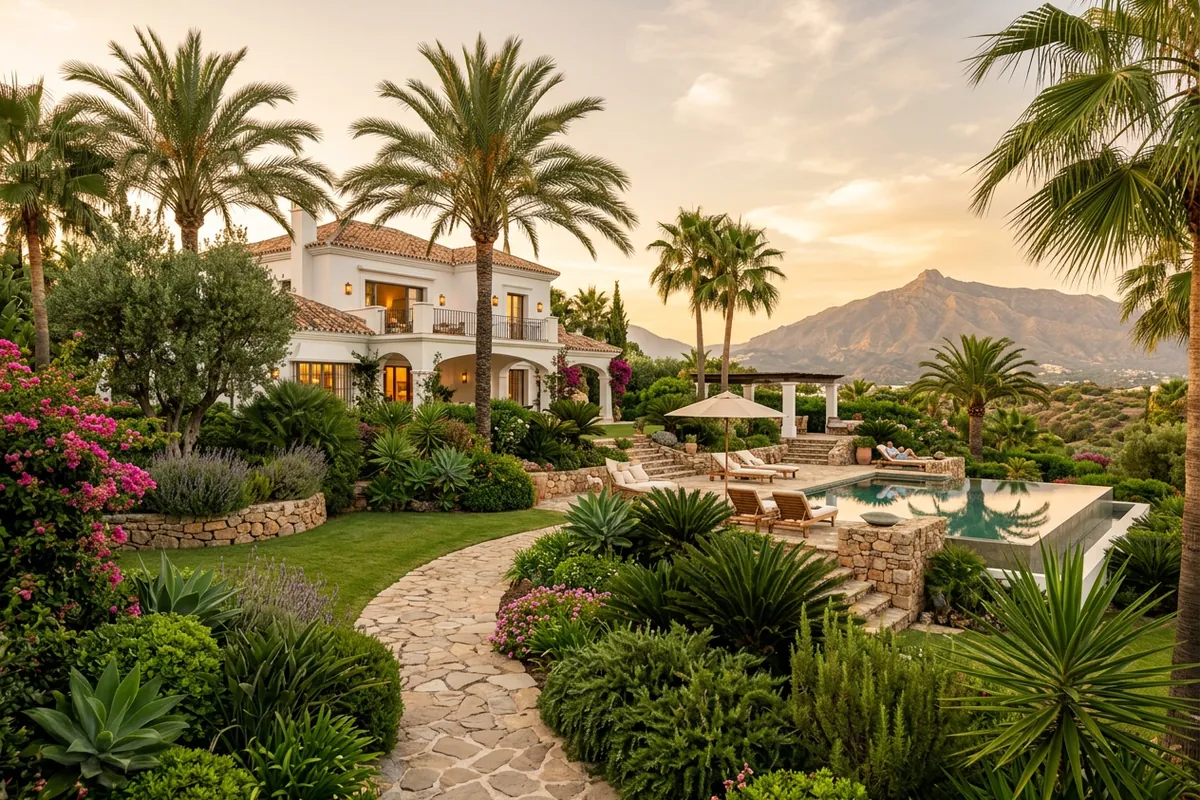
This is the famous "Golf Valley," a highly sought-after western district of the Marbella municipality. Geographically, it is delimited to the west by the Guadaiza River (bordering San Pedro Alcántara), to the east by the Verde River (bordering Marbella Oeste), to the north by Benahavís, Istán, and the scenic La Concepción Reservoir, and to the south by the Mediterranean Sea at Puerto Banús. The terrain is a dramatic south-facing slope that rises from the sea toward the mountains, with the iconic La Concha peak standing watch in the background.
This unique topography creates a microclimate where coastal salt spray (salitre) meets elevated, semi-inland conditions. Managing a garden here requires deep local knowledge of the microclimate, soil, municipal regulations, and community bylaws. Whether you own a modern villa in Las Brisas, a classic Andalusian estate in Aloha, or manage a premium community in Los Naranjos Golf, Magna Marbella, or El Ángel, this guide shares my practical, boots-on-the-ground experience to help you protect your landscaping investment.
The Landscape of Nueva Andalucía: A Premium International Enclave
To understand how to care for a garden in Nueva Andalucía, you must first understand its community. This is not a high-volume, budget tourism destination; it is a highly consolidated, premium market.
According to the official municipal census (padrón), the municipality of Marbella reached 173,420 registered residents as of January 1, 2026 (with the official INE figure slightly lower, at approximately 159,786 in 2024). The Distrito Nueva Andalucía itself accounts for 17,727 registered residents (based on the 2019 INE padrón, representing roughly 12.6% of Marbella's total). However, during the summer months, the district's population surges by approximately 30% due to tourism.
The foreign resident population is incredibly significant, making up about 36.5% of the entire Marbella municipality (63,206 registered foreigners representing 155 nationalities at the start of 2026). In Nueva Andalucía, the concentration of international owners is vastly higher than the municipal average due to the premium nature of its urbanizations.
The top nationalities shaping this market include:
- United Kingdom (approx. 5.638 residents in the municipality)
- Ukraine (approx. 5,200)
- Morocco (approx. 6,133, representing the largest foreign group in the wider municipality)
- Colombia (showing the highest growth rate into 2025)
- Sweden, Germany, Italy, France, and Belgium/Netherlands (who maintain an exceptionally strong presence in the luxury villa and golf-front segments)
For these discerning owners, the garden is not merely an afterthought; it is an extension of their living room. The demand is heavily focused on "outdoor living"—seamless transitions from indoor spaces to private pools, outdoor kitchens, bioclimatic pergolas, and low-maintenance, drought-resistant lawns.
The Microclimate Challenge: Sun, Wind, and "Terral"
Maintaining a lush garden in Nueva Andalucía means working with, and sometimes fighting against, the local elements. The region enjoys approximately 2,900 hours of sunshine per year, with average summer highs hovering around 30 degrees Celsius. However, the weather patterns are highly dynamic:
- The Winds: We experience a constant alternation between the Levante (an easterly, humid wind that brings moisture and salt spray) and the Poniente (a westerly, drier wind).
- The Terral: Occasionally, a hot, dry northern wind known as the terral sweeps down from the mountains. This wind can cause temperatures to spike suddenly in summer, rapidly dehydrating delicate plants and scorching lawns in a matter of hours.
- UV Exposure: The UV Index is exceptionally high in summer, frequently reaching 9 to 10 ("very high" to "extreme") at midday from June to August. This intense radiation not only stresses plants but also causes rapid fading and degradation of outdoor materials, including canvas awnings, wooden decking, and outdoor plastics.
- Rainfall: With an average annual rainfall of approximately 645.8 mm, concentrated mostly in the autumn and winter months, water management is a critical priority.
Because the Golf Valley rises from the sea level of Puerto Banús up to elevated hillsides near the borders of Istán and Benahavís, your garden’s specific elevation matters. Properties closer to the coast deal with high salitre (salt air), which burns the leaves of non-salt-tolerant plants. Properties higher up the hillside experience slightly cooler winter nights and are closer to protected mountain soils, requiring a different selection of flora.
Navigating Permits, Community Rules, and the PGOU
Before you plant a single tree, install artificial turf, or build an outdoor kitchen, you must understand the legal landscape of Marbella's planning department (Ayuntamiento de Marbella).
Nueva Andalucía is one of Marbella's five districts. It has its own local district office (Tenencia de Alcaldía), but it is not an independent municipality. All urban planning and building permits are governed by the Ayuntamiento de Marbella.
The PGOU and Parcel Verification
Urban planning in Marbella is complex. Following the Supreme Court's annulment of the 2010 PGOU in 2015, the municipality reverted largely to the 1986 PGOU, along with subsequent adaptations. While a new municipal plan (Plan General de Ordenación Municipal or PGOM) is currently being processed, it is absolutely vital to verify the specific zoning and classification of your parcel before undertaking major landscaping works. This is especially true for properties located in elevated areas near Sierra Blanca or Istán, where protected soils or steep slopes may restrict development. Furthermore, if your property is on the frontline of Puerto Banús or its adjacent beaches, the strict regulations of the Spanish Coastal Law (Ley de Costas) apply, enforcing protection zones (typically 100 meters, reduced to 20 meters in consolidated urban areas) and transit easements.
Obra Menor vs. Obra Mayor
To keep your landscaping project legal, you must distinguish between the two main types of municipal permits:
- Obra Menor (Minor Works): This requires a simplified license or a prior notification (declaración responsable). It covers non-structural updates such as installing artificial turf, putting up removable wooden pergolas, installing retractable awnings, or adding non-structural glass curtains to terraces.
- Obra Mayor (Major Works): This requires a full municipal building license, backed by a technical project drawn up by an architect. You will need this for building swimming pools, structural property extensions, or constructing permanent outdoor kitchens with brickwork and concrete foundations.
Community of Owners (Comunidad de Propietarios)
Because the vast majority of premium residential properties in Nueva Andalucía are located within private urbanizations or apartment complexes (such as Aloha Pueblo, Las Lomas de Nueva Andalucía, or Magna Marbella), you must also comply with community rules.
Even if the Ayuntamiento grants you a permit, any modifications that affect the external aesthetic of the property—such as enclosing a terrace, installing bioclimatic pergolas, changing the color of awnings, or altering boundary walls—require formal authorization from your Community of Owners. Failing to obtain this can result in costly legal disputes and demands to restore the property to its original state.
Essential Garden Maintenance: Local Pests and Environmental Threats
A beautiful garden in the Golf Valley requires vigilant, proactive maintenance. There are several highly destructive local pests and environmental challenges that my trusted maintenance partners deal with on a weekly basis:
1. The Pine Processionary Caterpillar (Procesionaria del Pino)
These caterpillars are highly active from January to April. They nest in pine trees (which are abundant in El Ángel and Aloha) and descend to the ground in long, nose-to-tail lines. Their microscopic hairs carry a powerful toxin that can cause severe allergic reactions in humans and can be fatal to dogs if touched or swallowed.
- Action Plan: Annual preventive spraying of pine trees in autumn (October/November) or the installation of physical collar traps on tree trunks in early winter is essential to protect your family and pets.
2. The Red Palm Weevil (Picudo Rojo)
This invasive beetle has devastated thousands of iconic Canary Island date palms (Phoenix canariensis) across the Costa del Sol. Once a palm tree shows signs of infection (a drooping, umbrella-like crown), it is often too late to save it.
- Action Plan: Preventive systemic treatments (either through micro-injection into the trunk or crown drenching) must be carried out every 45 to 60 days during the warm months to protect your palm trees.
3. Termites and Wood-Boring Insects
The combination of summer heat and winter humidity makes wooden structures—such as pergolas, decking, and wooden eaves—highly vulnerable to termites and wood rot.
- Action Plan: All outdoor timber must be treated annually with specialized insecticidal and fungicidal sealants (lasur) rather than heavy varnishes, which peel under the intense UV index of 9 to 10.
4. Bird-Proofing
Pigeons and seagulls can quickly deface beautiful outdoor dining areas, pool surrounds, and solar panels. Installing discreet netting under pergolas or stainless-steel bird spikes on roof ridges is a standard practice to keep outdoor living areas clean.
Practical Timelines and Management for Non-Resident Owners
For foreign owners, managing a property from afar can be stressful. Many of our clients from the UK, Sweden, Germany, or Belgium are non-residents who use their villas as second homes or rent them out under tourist licenses.
When you are not here, you need a structured property management system. If you are renting out your property, you must ensure your garden and pool are immaculate for arriving guests, which requires seamless coordination between your rental agency, your gardeners, and your pool technicians.
Cross-Border Estates and Legal Steps
If you are buying, selling, or inheriting a property in Nueva Andalucía, navigating the Spanish administrative system is a step-by-step process. Whether you are dealing with a UK estate or a German inheritance, the steps remain consistent:
- Obtain a NIE (Número de Identidad de Extranjero).
- Appoint a local lawyer or gestor to represent your interests.
- Draft a Spanish Will specifically covering your Spanish assets to avoid lengthy cross-border probate delays.
- Execute the deed before a local Notary in Marbella.
What to Expect: Practical Timelines
To help you plan your property management budget and schedule, here are realistic, local timelines for standard landscaping and maintenance services in the Marbella area:
- Routine Garden Maintenance: Typically scheduled 1 to 2 times per week for private villas in summer, and once a week or once every two weeks in winter.
- Minor Works Permit (Obra Menor / Declaración Responsable): Usually processed within 1 to 4 weeks through the Ayuntamiento de Marbella, assuming all paperwork is correctly submitted by your technical representative.
- Major Works Permit (Obra Mayor): Due to the complexity of the planning department and the volume of applications, obtaining a full building license for a new pool or major outdoor construction can take anywhere from 8 to 18 months. Planning well in advance is essential.
- Palm Tree Preventive Treatments: Performed 5 to 6 times a year, concentrated during the active flight season of the weevil (spring to autumn).
- Pine Processionary Treatment: A single, vital preventive treatment carried out in October or November of each year.
By understanding these local realities, planning for the unique microclimate of the Golf Valley, and respecting both municipal laws and community guidelines, you can ensure your outdoor sanctuary in Nueva Andalucía remains a valuable, stress-free asset for years to come.
Frequently Asked Questions
How much does Garden & Landscape Maintenance in Nueva Andalucía cost? ▼
The typical fee for Garden & Landscape Maintenance in Nueva Andalucía is EUR 100–300/month. We provide a transparent quote before any commitment.
Do you cover Nueva Andalucía and surrounding areas? ▼
Yes, we connect you with vetted professionals covering Nueva Andalucía and all nearby towns including Marbella, San Pedro de Alcántara.
How long does Garden & Landscape Maintenance take? ▼
Processing times vary, but most Garden & Landscape Maintenance cases in the Nueva Andalucía area are completed within 2-8 weeks depending on complexity.
Other Home Services in Nueva Andalucía
Property Management in Nueva Andalucía
Already own a property? We manage holiday rentals, long-term lets, and keyholding.
View Property Management in Nueva Andalucía →Also Serving Nearby
Get Your Free Property Assessment
Tell us your name and how to reach you. We respond within 2 hours.
or message us directly
WhatsApp Us Now