Painting & Decorating in Marbella
Professional painting and decorating services for Costa del Sol properties.
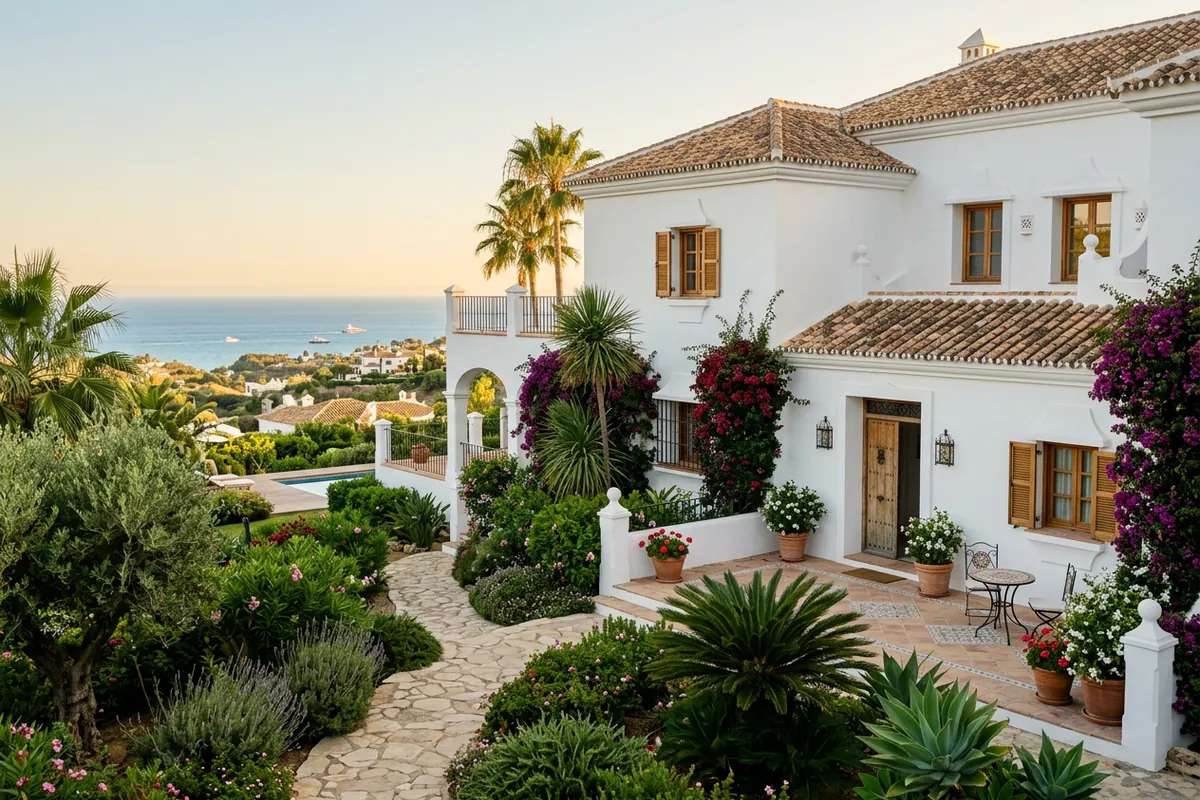
The Reality of Paint and Render in Marbella: Protecting Your Premium Investment
If you own a villa in Sierra Blanca, a frontline golf apartment in Nueva Andalucía’s Valle del Golf, or a townhouse in Elviria, you already know that Marbella’s microclimate is both a blessing and a relentless challenge. Over my years coordinating home maintenance and property services through costadelsolhabitat.com, I have watched countless international owners make the same mistake: treating a painting and rendering project here in the Costa del Sol Occidental like a standard cosmetic refresh in London, Brussels, or Munich.
Marbella is a premium, villa-led luxury market. Our clients are high-net-worth international buyers who expect flawless finishes. Yet, the local environment is unforgiving. With over 2,900 sun hours per year, a midday UV index peaking at 9 to 11 from June to August, and the constant, salt-laden sea breeze (salitre) blowing off our 27 kilometers of Mediterranean coastline, exterior surfaces here deteriorate at twice the speed of inland properties.
When the hot, dry terral wind sweeps down from the Sierra Blanca massif and the iconic La Concha peak, it carries dust and spikes temperatures, baking low-grade paints until they crack and peel. Conversely, the damp winter months bring around 600 mm of rain, driving moisture deep into porous exterior renders.
To preserve your property’s value and aesthetic appeal, you need a deep understanding of local materials, microclimates, and municipal regulations. Here is my practical guide to navigating painting, rendering, and façade restoration in Marbella.
The Chemistry of Marbella Façades: Combating Salitre, UV, and Terral
In Marbella, paint is not just about color; it is a protective shield against intense environmental elements. The combination of high humidity, sea salt (salitre), and extreme UV radiation will destroy standard retail paint within two seasons.
Understanding Exterior Render (Enfoscado) and Micro-cracks
Most properties in areas like Nagüeles, Los Naranjos, or San Pedro de Alcántara are finished with a cement-based render (enfoscado de cemento) or a traditional lime-based mortar. Because Marbella sits in a seismically active zone along the Mediterranean basin, minor ground movements and thermal expansion (from summer highs of 30°C down to cooler winter nights) cause micro-cracks in these renders.
Once a micro-crack opens, the sea air carries salt deep into the stucco. The salt crystallizes, expands, and blows the render right off the brickwork.
- The Solution: We never apply paint directly over cracked render. The substrate must be pressure-washed to remove salt deposits, stabilized with a high-penetration primer (fijador), and patched using fiber-reinforced, elastic mortar.
Choosing the Right Paint Technology
For premium villas in Sierra Blanca or Nueva Andalucía, we recommend and coordinate three primary types of exterior coatings:
- Silicone Resin Paints (Pinturas de Resina de Silicona): This is the gold standard for Marbella. They are highly water-repellent (causing rain and salt spray to bead and roll off) yet highly breathable, allowing internal moisture to escape.
- Silicate Paints (Pinturas al Silicato): These paints form a chemical bond with mineral substrates (like concrete or lime render) rather than just sitting on top. They are incredibly resistant to UV degradation and will not blister under the intense summer sun.
- Elastomeric Coatings (Pinturas Elásticas): Essential for older townhouses in Las Chapas or Elviria that suffer from recurring hairline cracks. These paints can stretch to bridge small structural movements. However, they must be applied carefully; if the substrate has rising damp, elastomeric paint can trap the moisture, leading to large bubbles.
Local Regulations, Community Rules, and the Marbella Planning Maze
Before a single drop of paint touches your villa or apartment façade, you must navigate a complex web of local administration, community rules, and coastal laws.
The 1986 PGOU and the Marbella Planning Landscape
Marbella’s urban planning is uniquely complex. The 2010 PGOU (General Urban Plan) was annulled by the Spanish Supreme Court in a landmark ruling on October 27, 2015. This decision instantly restored the old 1986 PGOU as the governing plan for the municipality. While a new PGOM (General Municipal Spatial Plan) received a favorable report from the Junta de Andalucía in February 2026 and awaits final plenary approval, the planning status of approximately 18,000 properties across Marbella remains legally uncertain.
Before undertaking major exterior rendering, structural repairs, or altering exterior walls, your technical team must verify the property’s status against the 1986 PGOU and check for any protected-zone overlays (especially in historic areas or specific sectors of Las Chapas).
Municipal Permits: Declaración Responsable vs. Obra Mayor
For simple aesthetic painting of a private villa, a formal building license is rarely required, though a prior notification (declaración responsable) should be filed with the Ayuntamiento de Marbella to cover scaffolding and waste containers (contenedores de obra).
However, if your painting project involves:
- Altering the structural volume of the property.
- Enclosing terraces with glass curtains (acristalamiento).
- Adding large pergolas.
You cannot use the fast-track declaración responsable. Marbella municipal ordinances explicitly exclude terrace glazing and volume expansions from the fast-track system; these require a full municipal license (obra mayor).
Furthermore, while small pergolas under approximately 5 square meters often require no license, the Ayuntamiento de Marbella has issued specific interpretive criteria regarding setback and separation distances from property boundaries. If your rendering or painting project involves installing or modifying a pergola near your boundary line, it must comply with these strict setback rules.
The Ley de Costas (Coastal Law)
If your property is a frontline beach villa in Elviria, Los Monteros, or near Puerto Banús, it may fall within the servidumbre de protección (protection easement zone), which extends 20 to 100 meters inland from the maritime-terrestrial public domain. Any exterior works, rendering, or structural scaffolding in this zone must be cleared not just by the Ayuntamiento, but also authorized by the regional coastal department of the Junta de Andalucía.
The Ley de Propiedad Horizontal (LPH) and Community Approvals
If your property is located within a community of owners (comunidad de propietarios)—which is highly common in urbanizations like Aloha, Los Naranjos, or beachfront complexes in San Pedro—you do not have free rein over your exterior.
Under Spain’s Ley de Propiedad Horizontal, any modification to common elements—including the color of your exterior walls, the style of your terrace railings, the type of awnings, or the rendering texture—requires formal community approval. Typically, this demands a three-fifths (3/5) qualified majority of the owners representing three-fifths of the participation quotas. Painting your townhouse a slightly different shade of white without this approval can result in legal action from the community, forcing you to repaint it at your own expense.
The Expat Profile: Managing Projects for International Owners
Marbella is home to a vibrant, multicultural population. According to the municipal padrón (INE) as of December 31, 2024, Marbella’s population stands at 166,999 residents (with the official INE figure from January 1, 2024, at approximately 159,000). Around 33 percent of our population is foreign-born, representing 52,173 residents from 153 registered nationalities.
The top nationalities driving the premium property market include the United Kingdom, Scandinavia (Sweden, Norway, and Denmark), Germany, Belgium, the Netherlands, Morocco, Colombia, Russia, and Ukraine.
Because many of our clients use their Marbella villas as second homes or high-end tourist rentals, they are rarely on-site to supervise maintenance works. This is where professional, bilingual coordination becomes essential.
Cross-Border Estates, NIEs, and Project Management
Many property renovations are triggered during ownership transitions—either after a purchase or during the resolution of cross-border estates (particularly common among British, German, and French families). In these scenarios, coordinating works requires working alongside your gestor, lawyer, or notary.
Before any contractor is hired, we ensure:
- All contractors are fully registered (alta) with Spanish Social Security and possess up-to-date liability insurance (Responsabilidad Civil). If an unregistered worker falls off a scaffold on your property, you, the homeowner, face severe financial and legal liabilities.
- The project has a clear, bilingual contract detailing the exact paint brands (e.g., Revetón, Valentine, or Keim), the number of coats, and the surface preparation steps.
- Daily or weekly photo and video updates are provided via secure cloud folders, ensuring peace of mind for owners residing in London, Stockholm, or Munich.
Practical Timelines and Execution
To ensure a high-spec, long-lasting finish, timing is everything in Marbella.
When to Paint in Marbella
- The Best Window: Spring (March to May) and Autumn (September to November) are the ideal seasons. Temperatures are moderate (18°C to 25°C), humidity is manageable, and the risk of sudden rain is low.
- The Summer Danger Zone (June to August): We avoid painting exterior walls in direct midday sunlight during summer. If the wall temperature exceeds 30°C, the paint dries too quickly, preventing proper adhesion and causing it to peel or powder within months.
- The Winter Risk (December to February): While winters are mild, high humidity and morning dew can trap moisture behind newly applied paint, leading to future blistering.
Typical Project Timelines
- 2-Bedroom Apartment (Interior): 3 to 5 working days.
- Standard Townhouse (Exterior Paint & Minor Render Repair): 7 to 12 working days, depending on scaffolding requirements.
- Detached Luxury Villa in Nueva Andalucía (Exterior Render Restoration & Premium Silicate Paint): 3 to 5 weeks, requiring professional scaffolding, high-pressure washing, deep crack stabilization, and multiple coats of premium protective finishes.
By respecting Marbella’s unique coastal geography, adhering strictly to the 1986 PGOU and community regulations, and selecting high-performance materials designed to withstand extreme UV and salitre, you can protect your Mediterranean investment for years to come.
Frequently Asked Questions
How much does Painting & Decorating in Marbella cost? ▼
The typical fee for Painting & Decorating in Marbella is EUR 500–5,000 depending on property size. We provide a transparent quote before any commitment.
Do you cover Marbella and surrounding areas? ▼
Yes, we connect you with vetted professionals covering Marbella and all nearby towns including San Pedro de Alcántara, Nueva Andalucía, Estepona.
How long does Painting & Decorating take? ▼
Processing times vary, but most Painting & Decorating cases in the Marbella area are completed within 2-8 weeks depending on complexity.
Other Home Services in Marbella
Property Management in Marbella
Already own a property? We manage holiday rentals, long-term lets, and keyholding.
View Property Management in Marbella →Also Serving Nearby
Get Your Free Property Assessment
Tell us your name and how to reach you. We respond within 2 hours.
or message us directly
WhatsApp Us Now