Roofing Services in Sotogrande
Professional roofing services for Costa del Sol properties.
The Reality of Roofing in Sotogrande: Water, Wind, and the Weight of the Levante
As a bilingual property broker coordinating villa management and home maintenance across the western Costa del Sol for years, I have learned that Sotogrande’s microclimate is as demanding as its real estate market is prestigious. While the wider region is famous for its blue skies, this ultra-exclusive enclave—nestled at the mouth of the Río Guadiaro in the Campo de Gibraltar comarca, just 15 kilometres from the Strait of Gibraltar—faces unique atmospheric forces.
Sotogrande is technically in Cádiz province, sitting roughly 25 kilometres west of the Málaga provincial border. Here, the Mediterranean meets the Atlantic influence of the Strait, creating a climate defined by approximately 300 days of sunshine a year, high summer UV indices of 9 to 10, and an average annual rainfall of 750 mm. This rain often arrives in intense, concentrated autumn and winter downpours.
More than the rain, it is the wind that dictates the terms of roof maintenance here. The powerful Levante (the damp, easterly wind blowing off the Strait) alternates with the dry, westerly Poniente. The Levante carries immense moisture and high salitre (salt-laden air). In coastal zones like Sotogrande Costa (Sotogrande Bajo), the prestigious Kings & Queens strip along Paseo del Parque, and the waterfront apartments of the Sotogrande Marina (such as Ribera del Marlin, Isla Carey, and Ribera del Obispo), this salt spray is highly concentrated. As you move inland to the elevated slopes of Sotogrande Alto, Almenara, and La Reserva de Sotogrande, the salt concentration transitions to medium, but the wind shear increases.
When a roof fails in Sotogrande, it is rarely due to a single storm. It is the cumulative result of baking summer heat expanding the building materials, followed by relentless Levante winds driving salt-laden moisture under tiles, topped off by heavy winter rains that find the tiniest microscopic cracks in the waterproofing membrane.
The Anatomy of Sotogrande Roofs: Common Failures by Zone
Through years of coordinating maintenance for international owners, I have seen how architectural styles across Sotogrande’s distinct zones present specific waterproofing vulnerabilities.
Traditional Andalusian Pitched Roofs (Sotogrande Costa & Kings & Queens)
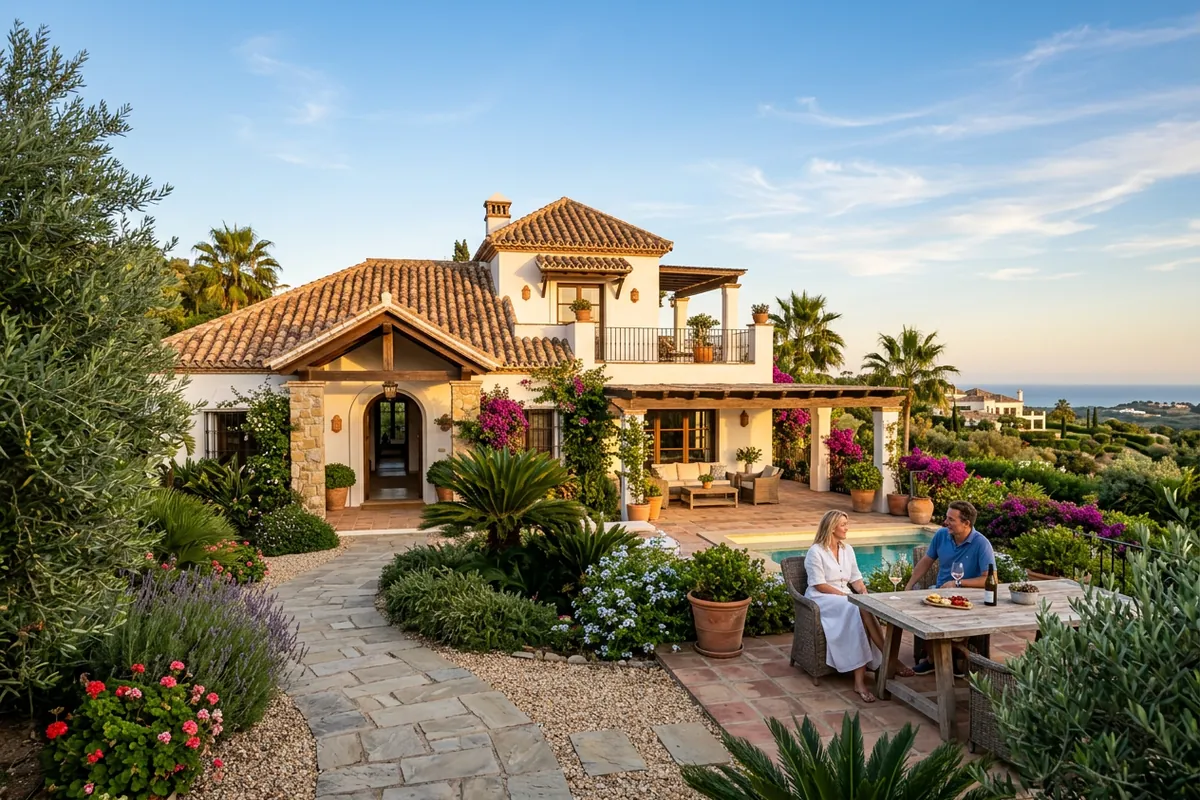
The classic, sprawling villas of Sotogrande Bajo often feature pitched roofs clad in traditional Arabic clay tiles (tejas árabes).
- The Vulnerability: Over time, the mortar securing the ridge tiles and valleys crystallizes and cracks due to thermal expansion and salt exposure. The Levante wind can lift loose tiles, allowing driving rain to penetrate the underlying mortar bed.
- The Consequence: Water pools on the internal concrete slab, eventually showing up as damp patches on the high, vaulted ceilings of master bedrooms.
Modern Flat Roofs and Solariums (La Reserva, Almenara & Modernist Sotogrande Alto)
The contemporary architectural trend in La Reserva and the Cármenes de Almenara features flat roofs (cubiertas transitables), designed to maximize panoramic views of the golf courses and the Mediterranean.
- The Vulnerability: These flat roofs rely entirely on elastomeric membranes, polyurethane coatings, or asphalt sheets (tela asfáltica) hidden beneath premium tiling. If the drainage slopes (pendientes) are even slightly off, water pools.
- The Consequence: Standing water, combined with high UV exposure, degrades the waterproofing membrane. Once the membrane punctures, water travels horizontally beneath the tiles, making the exact source of an interior leak notoriously difficult to pinpoint.
Marina Penthouses (Ribera del Marlin & Ribera del Obispo)
The luxury apartments in the Marina face the most extreme marine environment in the enclave.
- The Vulnerability: Terraces double as roofs for the apartments below. The joints between the tiled floors, the glass-curtain tracks, and the drainage channels are constant weak points.
- The Consequence: Salt crystallization expands within the tile grout, blowing out the joints and allowing water to seep directly into the structural concrete of the apartment below.
Waterproofing Solutions: Marine-Grade Standards for the Strait
In my role as a broker and maintenance coordinator, I advise clients never to accept quick-fix paint-on waterproofing solutions. The climate here demands premium-spec, marine-grade materials engineered to withstand high UV, salt, and wind.
1. Polyurethane and Polyurea Liquid Membranes
For flat roofs and solariums, cold-applied liquid polyurethane or hot-sprayed polyurea represents the gold standard.
- Why it works: It creates a seamless, fully adhered, elastic membrane across the entire roof. Unlike asphalt felt, it has no seams that can be compromised by the Levante wind or thermal movement.
- Application rule: It must be UV-stable to withstand our intense summer sun and protected by a topcoat to resist foot traffic on solariums.
2. Double-Layer Asphalt Membranes (Tela Asfáltica)
For traditional pitched roofs or under-tile waterproofing on flat roofs, we use a double layer of SBS-modified bitumen sheets. The SBS modification ensures the asphalt remains flexible at low temperatures and does not flow or degrade under the intense 30°C+ summer heat.
3. Breathable Under-Tile Membranes
When restoring a pitched roof in Kings & Queens, we install a water-resistant yet vapor-permeable membrane beneath the clay tiles. This allows any moisture trapped within the villa's structure to escape, preventing internal condensation and mold, while ensuring driven rain cannot penetrate the living spaces.
Navigating Local Regulations: Ayuntamiento de San Roque & The EUC
Sotogrande is not an independent municipality; it is a luxury development within the municipality of San Roque, which has a total population of approximately 33,018 residents (INE 2024). The núcleo of Sotogrande itself has a permanent resident population that fluctuates between approximately 2,600 and 3,300 residents (ranging from 2,584 per the 2020 INE census to roughly 2,932 in 2023, and rising toward an estimated 3,266 for 2024/2025). However, during the summer, the seasonal population swells to an estimated 12,500 as international owners arrive.
This high percentage of international ownership—well above San Roque's municipal average of approximately 13% foreign residents, led by British, Gibraltarian, Scandinavian, German, Dutch, and Belgian nationals—means that many owners are absentee. Managing a roofing project from abroad requires a strict understanding of local planning laws.
Municipal Permits (Ayuntamiento de San Roque)
All construction and renovation works must comply with the PGOU (General Plan) of San Roque, originally approved in 2000 and partially adapted to the LOUA in 2009.
- Obra Menor (Minor Works): Simple roof repairs, tile replacement, re-grouting, or localized waterproofing that do not alter the structural footprint, height, or external aesthetic of the property fall under this category. This is processed via a comunicación previa or declaración responsable (responsible declaration). The municipal wait time is typically around 10 working days, allowing works to commence quickly once fees are paid.
- Obra Mayor (Major Works): If you are completely replacing a roof structure, changing the roofline, converting a pitched roof to a flat solarium, or if the budget exceeds approximately €50,000, you must apply for an Obra Mayor license. This requires a formal technical project drawn up by an architect registered with the college (colegiado) and can take several months to be approved by the Ayuntamiento.
The Critical Layer: The EUC (Entidad Urbanística de Conservación)
Sotogrande is governed by an EUC (specifically under statutes definitively approved on April 25, 2019, covering sectors like Sector 42SO Zona B and the Puerto de Sotogrande area). The EUC enforces strict aesthetic, environmental, and community rules that go beyond municipal laws:
- Aesthetic Harmony: Any change to the color, material, or style of your roof tiles must be approved by the EUC’s architectural review committee. You cannot randomly lay modern grey slate on a villa in Sotogrande Costa if it violates the neighborhood covenants.
- Summer Construction Bans: To protect the peace of the summer season, the EUC strictly regulates noise and construction. Major roof renovations, scaffolding, and heavy machinery are generally banned or highly restricted during July and August, as well as on Sundays and during afternoon siesta hours.
- Ley de Costas: For frontline properties in the Marina, near the Guadiaro estuary, or bordering the Playa de Torreguadiaro, the strict setbacks (servidumbre de protección) of the Spanish Coastal Law apply. Before planning any terrace or roof-terrace alterations in these zones, the exact deslinde (coastal boundary line) must be verified.
Managing Your Roofing Project: Timelines & Practical Realities
For our international community—whether you are a British expat based year-round near the Santa María Polo Club, a Gibraltarian commuter with a villa in Sotogrande Alto, or a Scandinavian owner using your property for winter golf at Valderrama—understanding the practical timeline of a roofing project is essential.
When to Schedule Roof Works
The window for roof repairs in Sotogrande is highly strategic.
- The Ideal Window: Late spring (April to June) and early autumn (September to October) are the optimum periods. The weather is dry enough to expose a roof without immediate risk of flooding, yet temperatures are mild enough for waterproofing membranes to cure correctly without cracking under extreme heat.
- The Summer Trap: Avoid planning major works in July and August. Not only will the EUC and local community rules restrict your working hours, but extreme heat (often reaching 30°C and above) causes liquid-applied membranes to dry too quickly, compromising their structural integrity.
General Project Timelines (Indicative Only)
- Localized Leak Repair & Re-grouting (Marina Terrace): Typically 3 to 5 working days, assuming dry weather.
- Complete Waterproofing Overhaul (Flat Solarium, ~150 m²): Roughly 2 to 3 weeks. This includes stripping old tiles, repairing the screed, applying the double-layer membrane, flood-testing the roof for 48 hours, and retiling.
- Full Pitched Roof Renovation (Traditional Villa, ~300 m²): 4 to 6 weeks. This involves scaffolding, removing existing clay tiles, replacing damaged timber or concrete batten structures, installing breathable insulation membranes, and relaying the tiles (often reusing original weathered tiles on top to preserve the character, a technique highly favored by the EUC).
The Absentee Owner Protocol
Since many Sotogrande properties are second homes, I always recommend that owners establish a clear protocol with their project manager or broker:
- Daily Photo/Video Logs: Ensure your contractor provides daily updates, particularly of the hidden stages (such as the bare membrane before it is covered by tiles).
- Water-Tightness Testing: Insist on a 24-hour or 48-hour flood test of all flat roofs and gutters before the final tiling or protective layer is applied.
- Guarantees: Always secure a written guarantee for both materials (typically 10 years for premium membranes) and labor. Ensure the contractor is fully insured with active Responsabilidad Civil (public liability) insurance covering water damage during the works.
By respecting the local climate, choosing marine-grade materials engineered for the Levante wind, and strictly adhering to the regulatory frameworks of the Ayuntamiento de San Roque and the Sotogrande EUC, you can ensure your property remains a secure, dry, and valuable investment for decades to come.
Frequently Asked Questions
How much does Roofing Services in Sotogrande cost? ▼
The typical fee for Roofing Services in Sotogrande is EUR 300–5,000 depending on scope. We provide a transparent quote before any commitment.
Do you cover Sotogrande and surrounding areas? ▼
Yes, we connect you with vetted professionals covering Sotogrande and all nearby towns including Manilva, Estepona.
How long does Roofing Services take? ▼
Processing times vary, but most Roofing Services cases in the Sotogrande area are completed within 2-8 weeks depending on complexity.
Other Home Services in Sotogrande
Property Management in Sotogrande
Already own a property? We manage holiday rentals, long-term lets, and keyholding.
View Property Management in Sotogrande →Get Your Free Property Assessment
Tell us your name and how to reach you. We respond within 2 hours.
or message us directly
WhatsApp Us Now