Solar Panel Installation in San Pedro de Alcántara
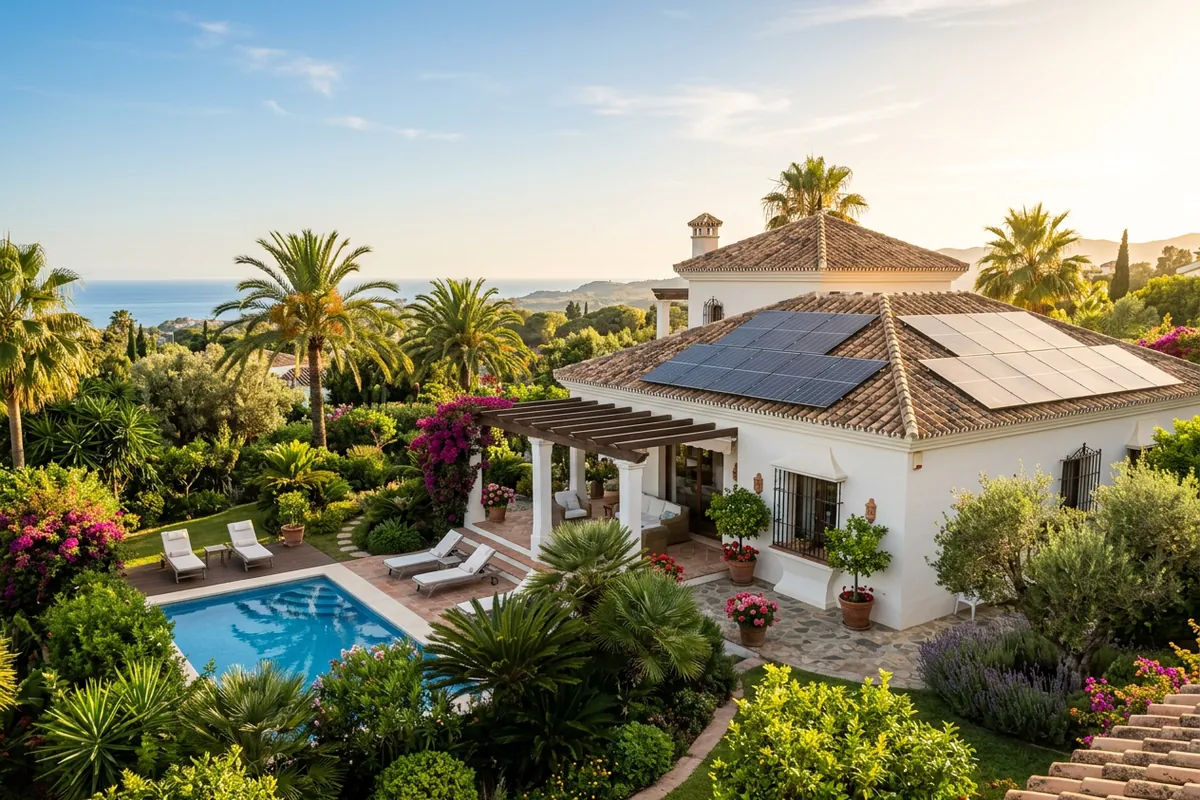
Professional solar panel installation for Costa del Sol properties.
Maximising Energy Efficiency in San Pedro de Alcántara: The Ultimate Guide to Solar PV and Aerotermia
As the founder of costadelsolhabitat.com, I have spent years coordinating property maintenance, renovations, and energy upgrades for international homeowners across the Costa del Sol Occidental. Over the last decade, San Pedro de Alcántara has evolved from a traditional Andalusian town into one of the most sought-after premium residential hubs on the coast.
With its population of 40,012 inhabitants (representing the second-largest urban nucleus of the Marbella municipality, which reached 165,871 residents in 2024 and is projected to hit 173,420 by 2026), San Pedro offers a unique micro-market. Here, approximately 24 to 30 percent of the municipal population consists of foreign residents—predominantly from the United Kingdom, Germany, Ukraine, Russia, Italy, Colombia, and Romania.
Whether you own a frontline beach villa in Guadalmina Baja, a golf-side residence in Guadalmina Alta, a modern apartment in Nueva Alcántara, or a family home in Cortijo Blanco, Linda Vista, Las Petunias, El Ingenio, or El Salto del Agua, managing energy costs is a top priority. With over 320 days of sunshine a year and roughly 2,900 sun hours annually, transitioning to solar photovoltaic (PV) systems combined with aerotermia (air-to-water heat pumps) is the most effective way to protect your investment, slash utility bills, and future-proof your property.
The San Pedro Climate: Why Solar and Aerotermia are the Perfect Match
To understand why this energy duopoly works so well in San Pedro de Alcántara, we must look at our unique local climate and geography. Nestled between the Mediterranean Sea and the dramatic peaks of Sierra Blanca and Sierra de las Nieves, San Pedro is bordered by three rivers: the Guadalmina, the Guadaiza, and the Río Verde.
Our coastal location delivers a specific set of environmental factors:
- Intense Solar Radiation: Summer highs regularly exceed 30 degrees Celsius, with an exceptionally high UV index of 9 to 10+ from June to August. This intense solar exposure provides an incredibly high yield for solar PV panels.
- Microclimatic Winds: We experience the dominant, damp Levante (easterly wind) during winter, the Poniente (westerly wind) in spring, and the occasional scorching Terral (a hot, dry northern wind blowing down from the mountains) in summer.
- High Salitre (Marine Salt Air): Because San Pedro boasts a 4.9-kilometre coastline stretching across the blue-flag beaches of Guadalmina, Linda Vista, and San Pedro, the air is highly corrosive. Salt mist and humidity can quickly degrade sub-standard electrical installations.
The Synergy of Solar PV and Aerotermia
While solar panels harvest the abundant Andalusian sunshine to generate electricity, aerotermia uses a highly efficient heat pump to extract up to 75 percent of its energy from the ambient air to provide domestic hot water, underfloor heating in winter, and air conditioning in summer.
When run on standard grid electricity, aerotermia is already highly efficient. However, when you pair it with a solar PV system, you run your heating, cooling, and hot water systems almost entirely on self-generated, free solar energy. During our hot summers, when your air conditioning demand peaks to combat the 30-degree-plus heat, your solar production is also at its absolute maximum. It is a perfectly balanced, self-sustaining cycle.
Navigating Local Regulations, Permits, and the Ley de Costas in San Pedro
Installing solar panels and aerotermia units in San Pedro de Alcántara requires navigating a specific legal and administrative landscape. Because San Pedro is part of the Marbella municipality, all building permits are processed under the Marbella Town Hall (Ayuntamiento de Marbella) through the local district office, the Tenencia de Alcaldía de San Pedro Alcántara.
1. Planning Permissions under the PGOU and LISTA
Marbella’s urban planning operates under the 1986 PGOU (the general urban plan reinstated after the 2010 PGOU was judicially annulled). It is vital to verify the exact classification of your plot before commencing work.
Fortunately, under the Andalusian planning law (Ley 7/2021 LISTA), the installation of solar panels for self-consumption on rooftops has been simplified. In most residential zones of San Pedro, such as Nueva Alcántara or Linda Vista, these installations no longer require a lengthy Obra Menor (minor works) building license. Instead, they can be executed via a Declaración Responsable de Obra (Responsible Declaration), which allows work to begin once the paperwork, technical project, and municipal fees are submitted.
However, if your property is located near protected archaeological zones—such as the early Christian basilica of Vega del Mar (Basílica Paleocristiana de Vega del Mar) near the mouth of the Guadalmina River—or if the installation requires structural modifications, a full municipal license may still be required.
2. The Coastal Law (Ley de Costas)
For frontline properties in Guadalmina Baja or the coastal strip of Linda Vista, the Spanish Coastal Law (Ley de Costas) applies. This law establishes a protection easement zone (servidumbre de protección) which is generally 100 metres from the shoreline but can be reduced to 20 metres in consolidated urban land. Any external works within this zone, including highly visible ground-mounted solar arrays or large external aerotermia heat pumps, require formal authorization from the Andalusian Coastal Department (Demarcación de Costas) before the town hall can greenlight the project.
3. Community of Owners (Comunidad de Propietarios)
If your property is an apartment in Nueva Alcántara or a townhouse in Las Petunias, you must consult your Community of Owners. Under Spanish Horizontal Property Law (Ley de Propiedad Horizontal), installing solar panels on shared roofs or placing large aerotermia compressor units on communal facades requires formal notification and, in some cases, a vote of approval. The aesthetic guidelines of the community must be respected, particularly regarding the visibility of cabling, inverter units, and external heat pumps.
Engineering for the Coastal Environment: Protecting Your Investment
In my years of managing properties in San Pedro, I have seen cheap installations fail within three seasons due to the harsh coastal environment. To ensure your solar and aerotermia systems last for 25+ years, several local engineering factors must be addressed:
Marine Corrosion (Salitre)
The salt-laden air of San Pedro is highly corrosive to metals and electronics.
- Solar Mounting Systems: Standard aluminium brackets will oxidise rapidly. Insist on marine-grade anodised aluminium or stainless steel (A4/316 grade) mounting structures.
- Inverters and Batteries: These should ideally be installed in a closed garage or utility room rather than outdoors. If they must go outside, they must be housed in IP65-rated, weather-proof, UV-resistant enclosures.
- Aerotermia Outdoor Units: The heat exchanger coils on the outdoor compressor unit must have anti-corrosive coatings (such as gold fin or blue fin epoxy coatings) to prevent salt air from eating away the copper and aluminium fins.
Wind Loads (Levante and Poniente)
Our coastal strip experiences strong wind gusts, particularly during winter Levante storms. Solar panels act like sails on a roof. Your installer must conduct a structural calculation to ensure the roof can bear the weight and that the ballast or mechanical fixings can withstand wind speeds exceeding 120 km/h.
Pest and Wildlife Protection
San Pedro's climate and geography bring specific biological challenges:
- Bird-Proofing: The coastal seagull and pigeon populations love the warm, sheltered space underneath pitched solar panels. Installing stainless steel bird mesh around the perimeter of the solar array is essential to prevent nesting, chewed wiring, and efficiency-reducing droppings.
- Insects and Rodents: Geckos, wasps, and rodents frequently seek shelter inside warm electrical inverter boxes. Ensure all cable entry points are sealed with fire-retardant expanding foam or tight cable glands.
The Practical Roadmap: Timelines and Process for International Owners
For our international clients—many of whom split their time between San Pedro and northern Europe—coordinating an installation remotely can feel daunting. Having a trusted local representative to manage the cross-border logistics, paperwork, and technical steps is invaluable.
Here is the typical timeline and step-by-step process we coordinate for property owners in San Pedro:
Step 1: Technical Study and Solar Audit (Weeks 1-2)
A qualified engineer must visit your property to evaluate your roof orientation, shading (from nearby palm trees or adjacent villas in Guadalmina), electrical connection (monofásico or trifásico), and your current energy consumption. For aerotermia, they will assess whether your existing pipework can support low-temperature radiators or underfloor heating, or if a fan-coil system is required.
Step 2: Quotation and Community Approval (Weeks 3-4)
You will receive a detailed engineering proposal. If you live in a community of owners, this is when we present the technical memory to the community administrator to secure the necessary approvals.
Step 3: Permitting and Declaración Responsable (Weeks 5-8)
Your technical project is drafted by an engineer, signed off by their professional college (Colegio Oficial), and submitted to the Tenencia de Alcaldía de San Pedro alongside the payment of the municipal construction tax (ICIO).
Step 4: Installation (Weeks 9-10)
The physical installation of a standard residential solar system (typically 5 to 10 kWp) takes between 2 to 3 days. A full aerotermia system installation, including the removal of old gas or diesel boilers and the integration of new buffer tanks, generally takes 4 to 7 working days.
Step 5: Legalisation and Utility Registration (Weeks 11-14)
Once installed, the system must be certified by a registered electrician who issues the Boletín Eléctrico (electrical bulletin). This is submitted to the Industry Department of the Junta de Andalucía. Once registered, your utility provider (typically Endesa/e-distribución in the Marbella area) is legally required to update your contract, allowing you to sell your excess solar energy back to the grid (compensación de excedentes).
Financial Realities: Costs, Savings, and Tax Incentives
While I do not quote fixed prices—as every villa in Guadalmina and apartment in Nueva Alcántara has unique structural demands—it is helpful to understand the general market ranges for high-quality, marine-grade installations in our region:
- Solar PV Systems: A premium domestic system ranging from 4 kWp to 8 kWp, utilizing high-efficiency tier-one panels and a hybrid inverter, typically ranges from 5,000 EUR to 10,000 EUR. Adding lithium-ion battery storage (highly recommended to run your aerotermia cooling during warm summer nights) generally adds between 4,000 EUR and 8,000 EUR to the investment.
- Aerotermia Systems: A complete air-to-water system for heating, cooling, and hot water for a medium-to-large villa in San Pedro typically ranges from 10,000 EUR to 18,000 EUR, depending on the capacity of the heat pump and whether it integrates with existing underfloor heating.
Return on Investment (ROI) and Incentives
In San Pedro de Alcántara, the financial return is highly accelerated due to our high solar yield and local municipal incentives:
- IBI Tax Reductions: The Ayuntamiento de Marbella periodically offers discounts of up to 50 percent on your annual property tax (Impuesto sobre Bienes Inmuebles - IBI) for a set number of years following the installation of certified solar PV systems, subject to meeting specific municipal criteria and application deadlines.
- IRPF Tax Deductions: Under Spanish national tax laws, homeowners who undertake energy-efficiency renovations that reduce non-renewable primary energy consumption by a certified percentage can claim significant deductions on their personal income tax (IRPF) return. This requires pre- and post-installation Energy Performance Certificates (EPCs / Certificados de Eficiencia Energética).
- Immediate Bill Reduction: Combining solar and aerotermia typically slashes monthly electricity bills by 60 to 80 percent, protecting you from future energy market volatility.
By investing in professional, marine-grade solar PV and aerotermia systems, you do more than just lower your running costs. You elevate your property's energy rating, significantly increase its market value in premium areas like Guadalmina, and ensure that your San Pedro home remains a comfortable, sustainable sanctuary for decades to come.
Frequently Asked Questions
How much does Solar Panel Installation in San Pedro de Alcántara cost? ▼
The typical fee for Solar Panel Installation in San Pedro de Alcántara is EUR 5,000–15,000 for residential system. We provide a transparent quote before any commitment.
Do you cover San Pedro de Alcántara and surrounding areas? ▼
Yes, we connect you with vetted professionals covering San Pedro de Alcántara and all nearby towns including Marbella, Nueva Andalucía, Estepona.
How long does Solar Panel Installation take? ▼
Processing times vary, but most Solar Panel Installation cases in the San Pedro de Alcántara area are completed within 2-8 weeks depending on complexity.
Other Home Services in San Pedro de Alcántara
Property Management in San Pedro de Alcántara
Already own a property? We manage holiday rentals, long-term lets, and keyholding.
View Property Management in San Pedro de Alcántara →Also Serving Nearby
Get Your Free Property Assessment
Tell us your name and how to reach you. We respond within 2 hours.
or message us directly
WhatsApp Us Now